Migrating a Company Website from Nuxt to Next.js and Headless WordPress
Backstory
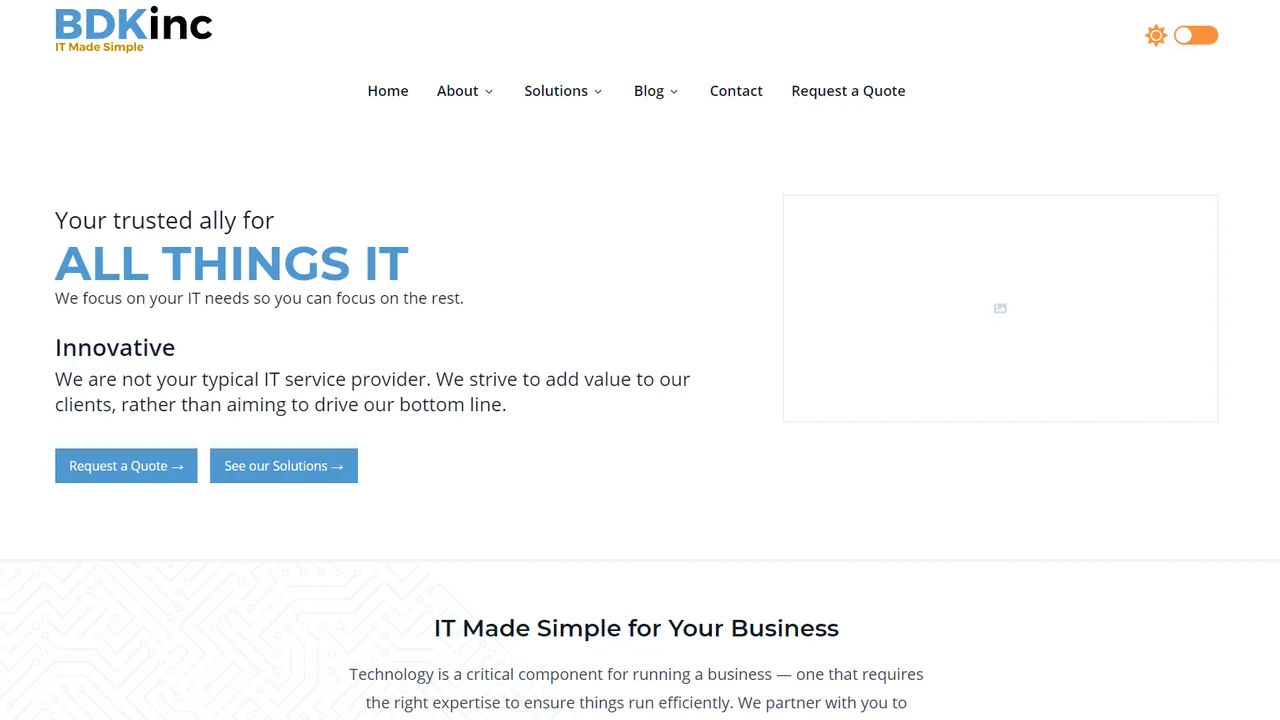
In late 2022, we began updating the BDKinc website. Marketing provided the content, the Design Specialist created the visuals, and I led the technical build. Although I had other responsibilities, building our web presence was a passion project rooted in my background as a Web Developer/Designer.
Technical Decisions
The existing site used Nuxt with a Directus CMS, running in Docker with a Traefik proxy. I originally managed this single-server setup alone. As the company grew, we needed a scalable solution.
I switched from Nuxt to Next.js for several reasons:
- Industry Standard: React is more prevalent than Vue, making it easier to train employees.
- Features: SSR, the new App Directory, React Server Components.
- Deployment: Easy edge deployment via Vercel (the creators of Next.js).
The website preview runs on Vercel. Moving the frontend to the edge improved performance and enabled GitHub-based deployments, shifting proxy and web server responsibilities to the edge provider.
We retained Directus as the CMS but needed an upgrade. While I suggested other options, the marketing team preferred WordPress. We implemented headless WordPress, allowing us to use Next.js on the edge while giving content creators a familiar platform.
Long Term Strategy
Separating the frontend from the CMS facilitates integrations. For example:
- The “Meet the Team” page could pull employee data directly from Microsoft 365, updating in one place.
- Contact forms could funnel data directly into our CRM, streamlining the sales process.
Building a Hosting Brand Site with Next.js and Real DC Photography
We needed a dedicated, marketable site for our hosting services. I used actual data center photography and Next.js to build it.
Welcome to the Atomic Drafting Room
Why I tore down the Renaissance Technical design and rebuilt the site in Raygun Gothic — atomic starbursts, chrome typography, and a turquoise-coral-gold palette that finally feels like me.
Renaissance Technical: Designing with AI
How I used OpenCode and Gemini to build a "Renaissance Technical" design system that pits rigid grids against organic circles—and why AI is the brush, not the painter.