Tracking Warehouse Inventory with Laravel, Vue.js, and Barcode Scanning
Preface
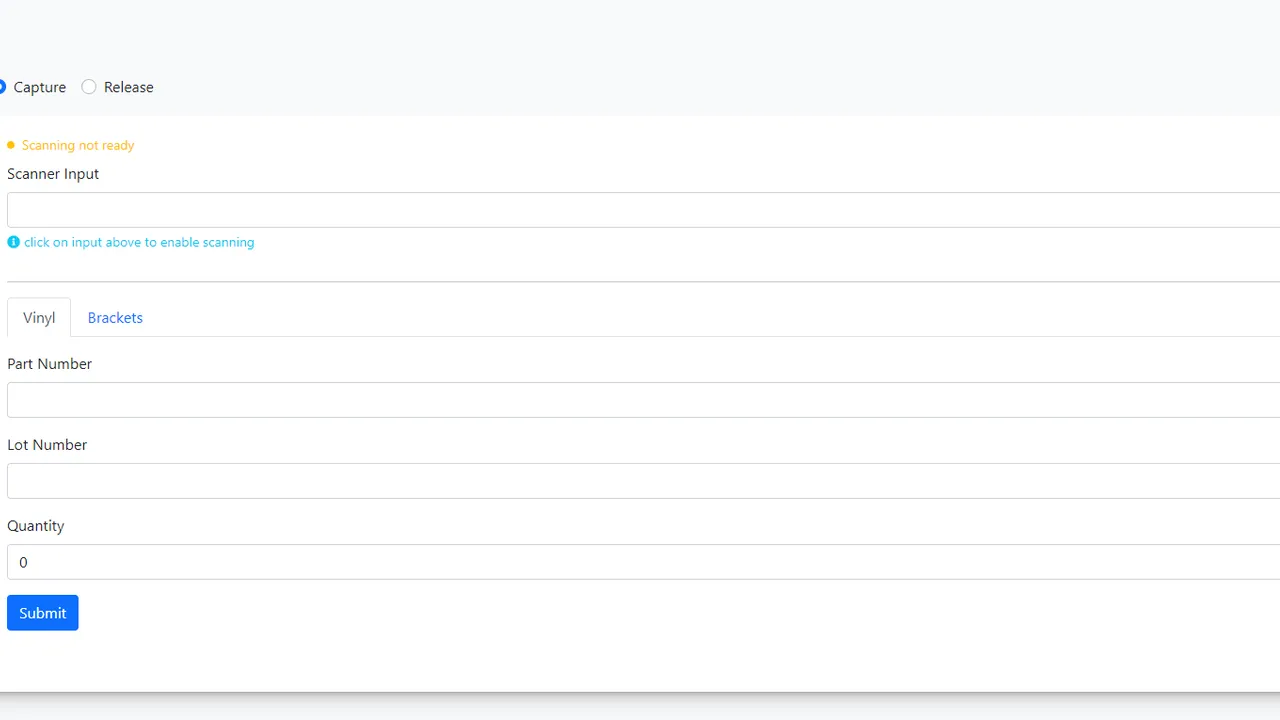
A vinyl fencing company needed a simple system to track warehouse inventory. Requirements included scanning vendor barcodes to receive items, looking up inventory, filtering with shareable URL-synced links, and a pre-programmed interface for different item types.
Technical Decisions
Architecture
I chose a decoupled architecture: a Vue.js SPA frontend communicating with a Laravel API backend.
Backend
Laravel provides a complete, robust framework. Inspired by Rails but built on PHP, it enables a single developer to build full-stack applications efficiently.
Frontend
The frontend uses Vue.js and Vite.
- Vite: Faster and easier to configure than Laravel Mix or Webpack.
- Vue.js: Excellent performance and reactive state management.
- UI: Bootstrap 5, which integrates well with Vite + Vue and offers utility and component classes.
Deployment
I use Docker to deploy both frontend and backend containers to an Ubuntu server. A Traefik proxy manages access, with NGINX behind it to serve both applications from the same domain. While Traefik can handle this, the NGINX container improves portability.
A Badge-Scanning Time Tracker for Warehouse Floors
Warehouse employees scan badges or barcodes to log tasks. I built a Vue.js + Laravel app with URL-synced filters for easy reporting.
Welcome to the Atomic Drafting Room
Why I tore down the Renaissance Technical design and rebuilt the site in Raygun Gothic — atomic starbursts, chrome typography, and a turquoise-coral-gold palette that finally feels like me.
Bringing AI to IBM i: An MCP Server with 31 System Tools
A BYOK MCP server that exposes 31 facade tools for IBM i observability, job management, and security. Built to train new users and accelerate expert workflows.